Understand the world’s most famous paintings.
Pick a painting and we take you round it one detail at a time, with what curators, historians and the painters themselves said about each one. About ten minutes a painting.
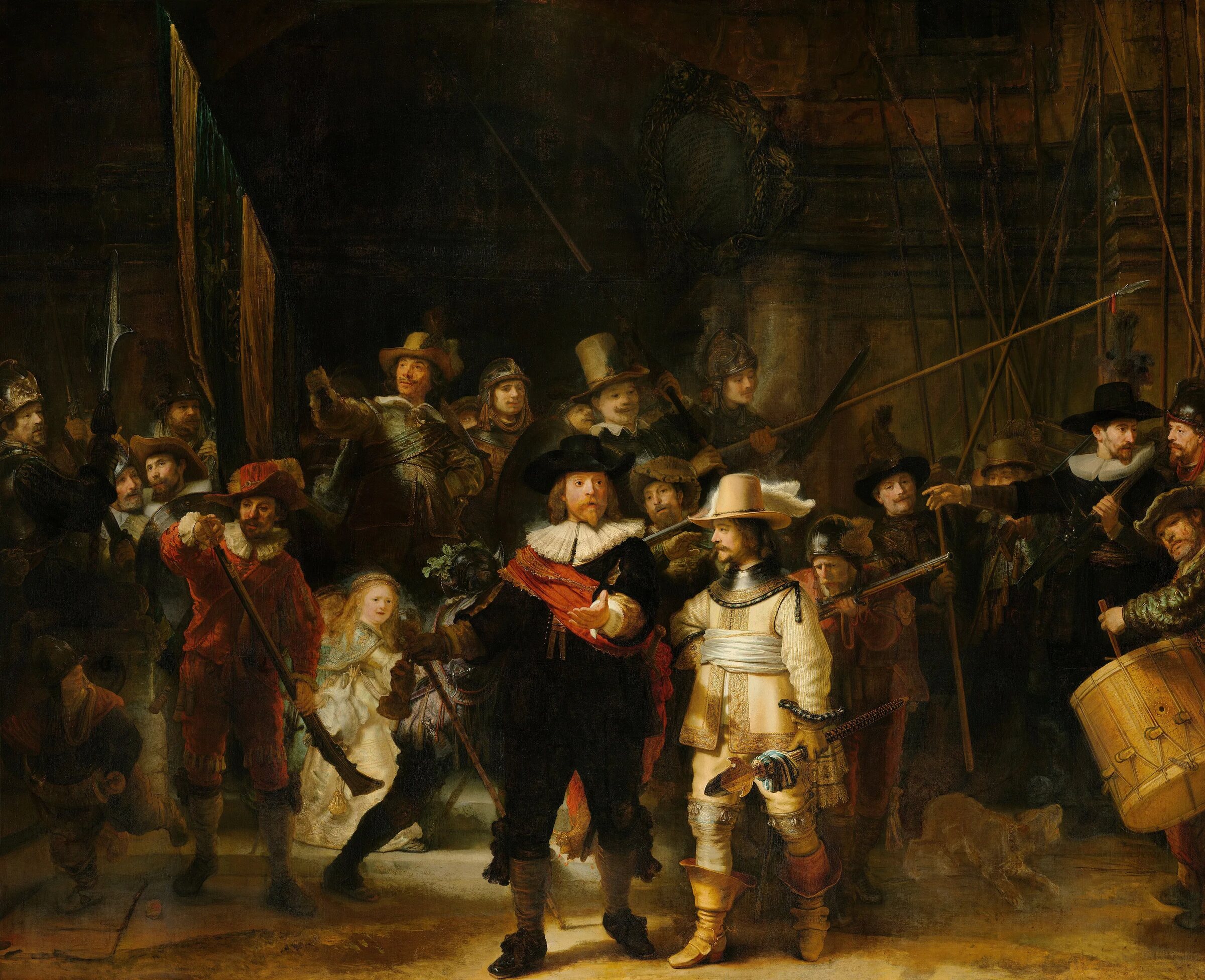
The Night Watch, Rembrandt, 1642. In the circle: the girl most visitors miss.
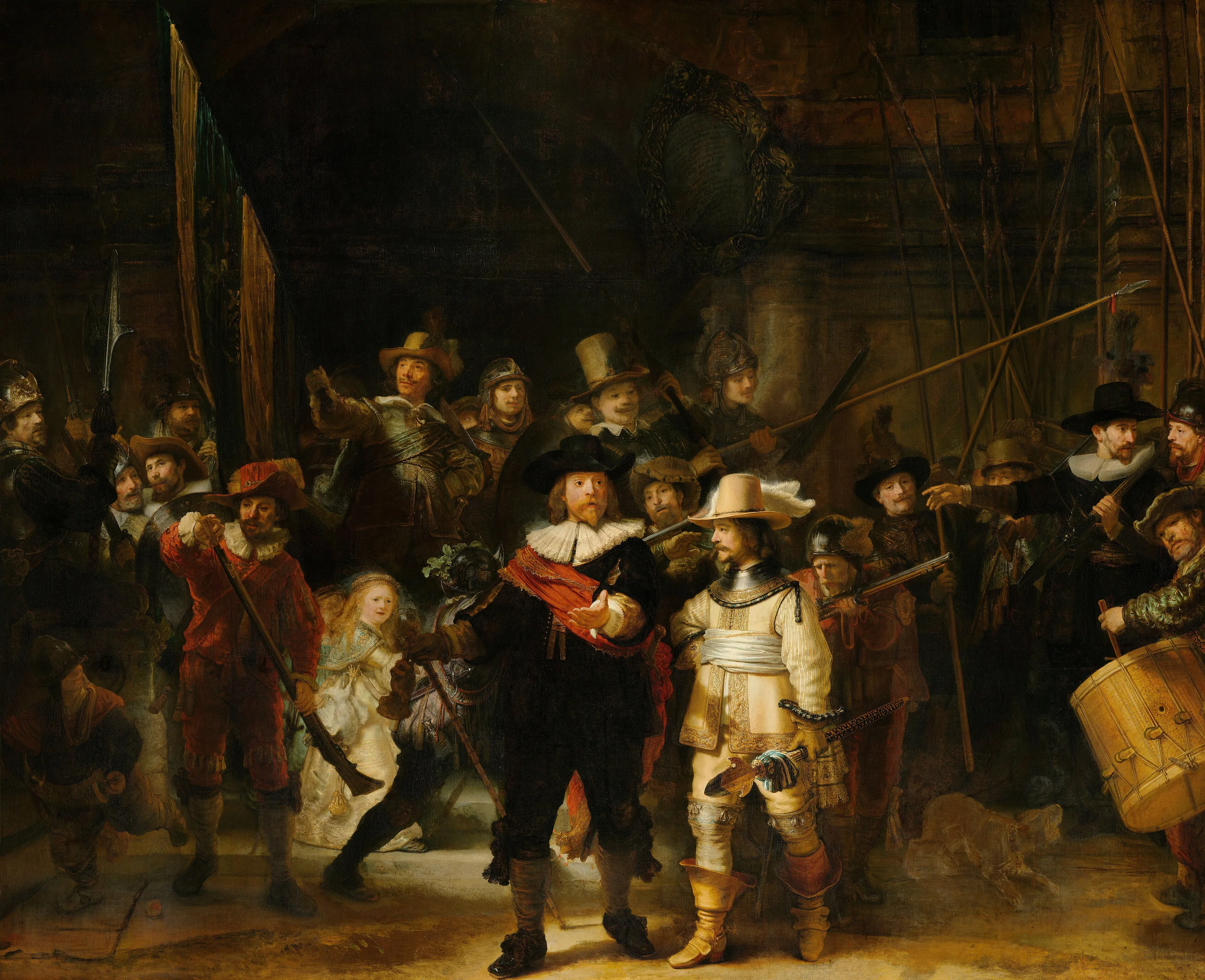
“her glowing tresses carry a dead chicken, whose claw was the troop’s emblem.”
Richard Whiddington, Artnet, on the girl in The Night Watch
“with his meagre annual income of 40 guilders, appearing in a Rembrandt portrait, which would have cost at least 100 guilders, would normally have been well beyond his reach.”
Rijksmuseum, on the drummer
Read famous paintings like a historian.
Most people give a famous painting less than half a minute. We take you round it detail by detail, with what curators, historians and the painters themselves said about each one.
What reading a painting looks like
Three things most visitors walk past, and who told us.
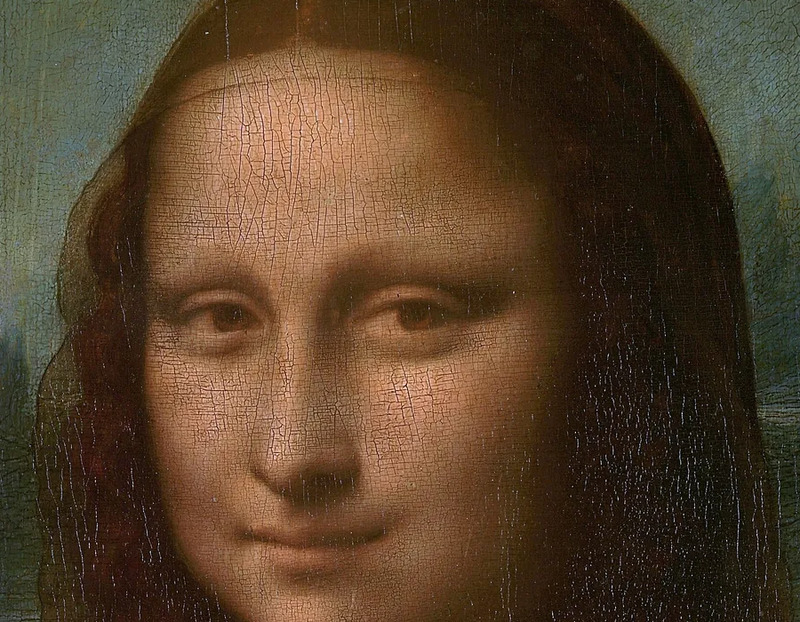
In 1550 a writer praised the Mona Lisa’s eyebrows. She has none.
“The eyebrows… could not be more natural.”
Giorgio Vasari, 1550. The Louvre says he never saw the painting.
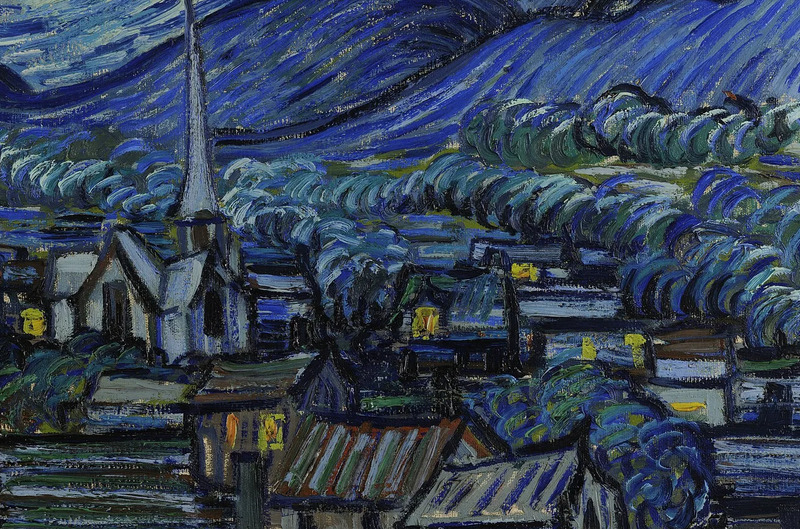
The village in The Starry Night wasn’t in the view from his window.
“The picturesque village nestled below the hills was based on other views—it could not be seen from his window”
Museum of Modern Art, New York
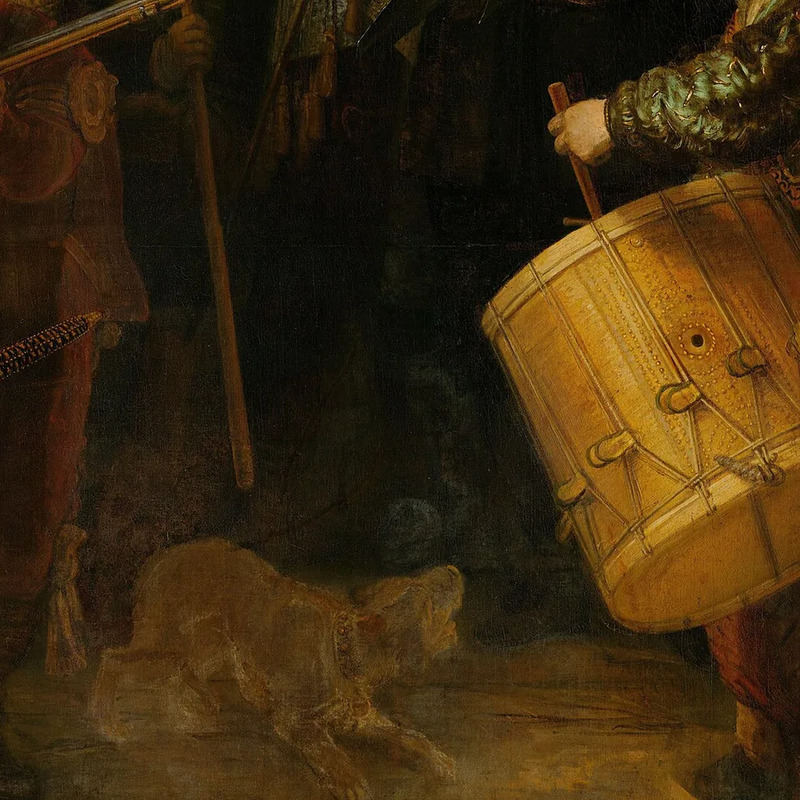
The drummer in The Night Watch couldn’t afford to be in it.
“with his meagre annual income of 40 guilders, appearing in a Rembrandt portrait, which would have cost at least 100 guilders, would normally have been well beyond his reach.”
Rijksmuseum, Amsterdam
Where this started
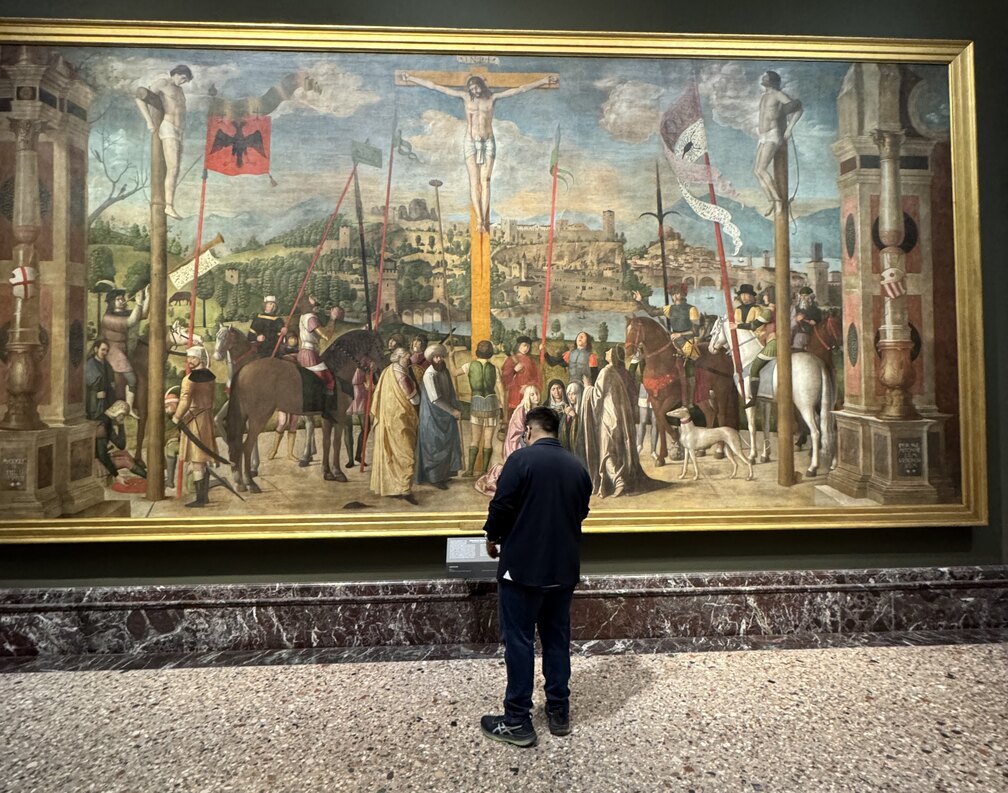
A while back in Milan I stopped in front of one, the size of a wall. A crucifixion, hundreds of people, a whole city behind them. I gave it a minute. The label gave me the name, the painter, the date, and nothing about what was going on. I moved on.
Then someone showed me you can actually read one. You count the people. You work out who they are, who paid to be in it, who’s allowed to look at whom, what the thing in the corner is doing.
I’ve never taken an art history class. This felt like the first taste of one.
Akash
Why read a painting at all
In 2001 two researchers, Jeffrey and Lisa Smith, watched 150 visitors at the Metropolitan Museum in New York look at six paintings in the collection. The typical visitor stayed 17 seconds. When they ran the study again at the Art Institute of Chicago in 2017, the average was still under 30.
Seventeen seconds gets you the famous face and a photo. What makes a painting worth the queue takes longer to find, and the label beside it usually lists the painter, the date and who gave it to the museum.
Knowing what to look for also changes how long you stay. In a 2025 study at the Penn Museum, Anjan Chatterjee’s team looked at what happens when visitors look slowly. They didn’t like the objects any more, but they rated them as more beautiful.
Going to a museum? Read these first
The most famous paintings in six museums. The ones you can read now are marked.
How it works
Pick a painting. You see the whole thing first, then the view moves in on one detail at a time: a face, a hand, a dog, a strip of canvas that was cut off. Under each one is what someone who knows the painting said about it, with their name. That might be the museum’s curators, a historian, a critic from the painter’s own time, the painter’s letters, or a visitor.
Each painting has 20 to 30 stops and takes about ten minutes. Click, tap or press the right arrow to move on.
Look inside before you buy
Open any of these in full and see exactly what you’re paying for.
Pick how many paintings
One payment. No subscription, no account to keep paying for.
The 100 most famous
$49
The paintings people queue for: the Mona Lisa, The Night Watch, Las Meninas, The Birth of Venus and 96 more.
Get 100 paintings- 20 to 30 stops per painting, each with the name of the person who said it
- Museum guides for the Louvre, Rijksmuseum, Prado, Uffizi, Orsay and the National Gallery
- Works on your phone, so you can read a painting while you stand in front of it
Not what you hoped for? Email hello@howtoreadpaintings.com within 7 days and we refund you in full. Payments are handled by Stripe.
Questions
Do I need to know anything about art?
No. Each painting starts with the whole picture and what it is, then moves one detail at a time. Every stop is a sentence or two.
Who writes it?
The people who know the paintings. Each stop is a quote from a curator, a historian, a critic from the time, the painter’s own letters, or someone who saw it in person, with their name next to it. We choose the stops and the order.
Is it a subscription?
No. You pay once and keep access on this device and browser. If you change phone, email us and we send you a new link.
Are all the paintings ready?
Not yet. We add new ones every week, museum by museum, and you get each one in your tier the day it’s added. The museum guides above show which are ready today.
Can I get a refund?
Yes, within 7 days of paying. Email hello@howtoreadpaintings.com.
Can I use it inside the museum?
Yes. It works in the browser on your phone, and each painting takes about ten minutes.